Drop deck trailers are one of the most useful configurations in the Australian heavy transport toolkit. They give operators the ability to move taller freight, oversized plant, and awkward machinery loads that a flat top simply cannot handle without pushing height limits. But not every drop deck trailer is built the same, and the difference between a well spec’d unit that quietly earns its keep for a decade and a cheaper alternative that ends up costing more over the ownership life often comes down to details that are not obvious at first glance.
If you are getting close to a purchase, this guide walks through what to actually look at, what questions to ask, and what red flags to watch for. It covers the practical considerations that shape whether a trailer suits your specific work, whether the build quality stacks up, and whether the total cost of ownership makes sense given what you plan to do with it. Use it before you shortlist, and pair it with a look at the real truck trailers available in your market when you are ready to move from research into decision.
What a Drop Deck Trailer Actually Does
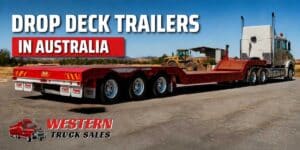
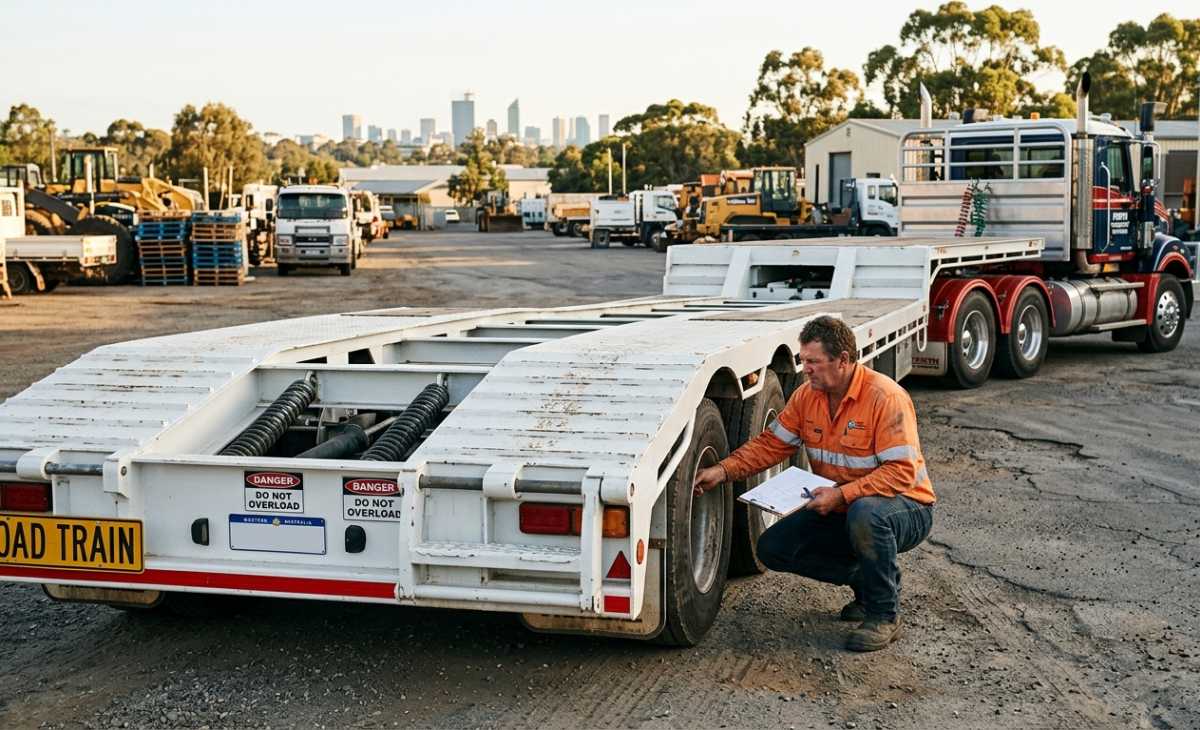
The distinguishing feature of a drop deck trailer is right there in the name. The main deck sits lower than a standard flat top, typically by around 400 to 500 millimetres, which gives you extra vertical clearance for the load you are carrying. That may not sound like much, but for machinery, tall freight, or oversized plant, that extra room is often the difference between a legal load and a load that needs escorts, permits, or route changes.
The trailer usually has a step down from the front section, where the gooseneck sits at conventional height for coupling to the prime mover, to the lower main deck behind it. Some units also feature a rear step or ramp arrangement to allow machinery to drive on and off. Various rear axle groups, ramps, and specialised features are configured to suit different applications, from general heavy freight through to specialised recovery and machinery movement work.
Drop decks are common across civil construction, plant hire, machinery movement, mining support, agricultural equipment transport, and general oversize haulage. Anywhere the load is taller than a standard flat top can handle within height limits, a drop deck starts to make sense.
When Drop Deck Beats Flat Top
The obvious case is any load that would exceed the legal height on a flat top but fits within limits on a lower deck. Excavators, dozers, agricultural machinery, mining plant, and building trusses are all good examples. If you regularly find yourself measuring loads and wondering if they will clear the last overpass on your route, a drop deck removes a lot of that anxiety.
The less obvious case is where the load actually fits on a flat top but the drop deck makes the whole job easier. Lower deck height means shorter ramps for machinery loading. It means less overhead reach for strapping. It means better visibility from the prime mover and better stability with tall loads. For operators moving mixed freight where machinery is a regular part of the work, a drop deck is often the more versatile choice even when maximum height is not the constraint.
The trade off is payload volume. A drop deck carries less cargo volume than a flat top of the same length because the front step area is not usable for general freight. If your work is primarily palletised freight or steel that would sit low on either configuration, the flat top is often the more efficient option. Choose the configuration that matches the freight, not the one that looks more capable on paper.
What to Look for When Buying a Drop Deck Trailer That Suits Your Work
Once you have decided that a drop deck is the right configuration, the next question is which drop deck. This is where the checklist matters, because the market offers everything from budget builds to premium heavy duty units, and telling them apart requires some knowledge of what to look at.
Start with the intended work. A trailer that will move relatively light equipment on sealed highway between metropolitan yards has very different requirements from one that will carry heavy plant across unsealed haul roads in the Pilbara. Both are drop decks. Both will look similar in photos. But the spec that suits one is inadequate or wasteful for the other.
Match the trailer to the load. Consider the heaviest load you realistically expect to carry, not just the average. Consider the width of that load, since some drop decks are widening configurations while others are fixed width. Consider the length, height, and weight distribution. Consider the loading and unloading method, since that affects ramp requirements, tie down points, and deck design.
Match the trailer to the routes. Sealed highway is one world. Unsealed haul roads are another. Long distance interstate work stresses running gear differently from short local cycles. If you regularly run through remote areas, parts availability and support matter more than they do for operators who never leave the metro area. Pick a configuration that suits where the trailer will actually spend its time.
Match the trailer to the combination. Your prime mover, the coupling arrangement, and the combination mass you plan to run all shape what trailer spec is appropriate. A trailer rated for single trailer work is not necessarily suitable for higher combination masses under permit. Confirm compatibility upfront, not after delivery.
For fleet buyers considering different drop deck options across the same product family, the range of next generation heavy duty triaxle drop deck trailers covers a spread of configurations aimed at different applications and gives a useful reference point for what modern heavy duty builds should offer.
Chassis and Deck Construction Basics
The chassis is the backbone of the trailer, and the quality of construction largely determines the working life of the unit. A well built chassis stands up to years of hard work with minimal intervention. A cheap chassis starts showing cracks, weld failures, and structural issues far sooner than most owners expect.
When looking at chassis construction, pay attention to the material grade of the main rails, the cross member arrangement, the way the neck steps down to the main deck, and the general quality of welding throughout. Higher grade steels, heavier gauge material, and thoughtful reinforcement in high stress areas all contribute to a longer working life. Cheap builds cut corners in exactly these areas because the savings are large and the consequences only become obvious years later.
Deck construction matters as much as the chassis underneath it. Deck material varies between manufacturers and configurations, with options including timber, steel plate, and composite arrangements. Each has advantages and trade offs around weight, wear resistance, load protection, and repair. Look at the deck condition on used units for evidence of wear patterns, damage from previous loads, and any signs of structural issues underneath.
The neck design, which is where the front section steps down to the main deck, is a high stress area that deserves specific attention. Look for solid welding, appropriate reinforcement, and no visible signs of cracking, fatigue, or previous repair. This area takes the concentrated force from the combined weight of the load and the geometry of the step, and problems here can be expensive to rectify.
Tie down points and load restraint fittings need to be inspected too. These are used constantly throughout the working life of the trailer and are subject to significant loading. Look for rated fittings, solid welding at the attachment points, and no signs of deformation or wear that would suggest overloading.
Suspension, Axles, and Running Gear Considerations
Suspension type is one of the bigger decisions for a drop deck trailer, and the right choice depends on what the trailer will actually do.
Air suspension provides better ride quality, adjustable ride height for loading, and generally better load protection for equipment being transported. It is the common choice for machinery movement, particularly for expensive or vibration sensitive gear. It adds cost and some maintenance complexity but the benefits are usually worth it for the applications drop decks typically serve.
Spring suspension is simpler and more robust in some environments, particularly for the toughest off highway conditions. It is cheaper to buy and less complex to service, but the ride is harder and the load protection is not as good. For very heavy duty specialised applications where robustness trumps ride quality, spring suspension still has a place.
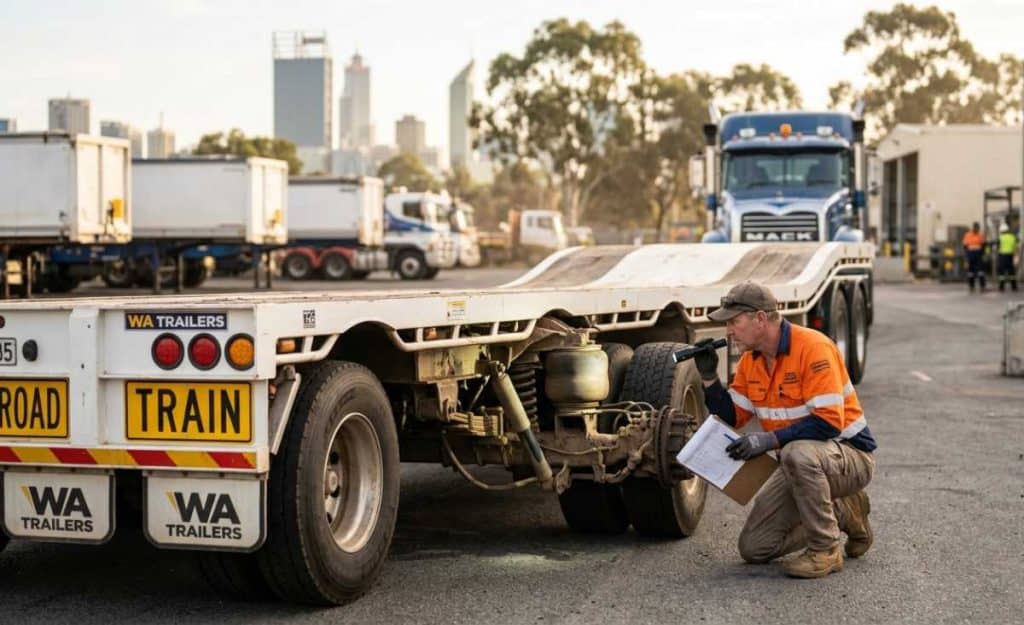
Axle specification matters for both load rating and long term reliability. Heavier duty axles with quality bearings, seals, and brake assemblies stand up to hard work for years. Cheaper axles start showing bearing issues, brake wear, and seal failures earlier. Ask about the axle brand, the load rating, the service intervals, and the parts availability before committing.
Brake systems are critical for combinations at heavy combination masses. Air brakes with proper ABS or EBS integration and matched components between prime mover and trailer are what keep a loaded combination under control. Auto slack adjusters, quality brake chambers, and appropriate friction material selection all contribute to consistent performance.
Tyres and rims deserve a look. Correct sizing matched across axles, appropriate load rating for the intended combination mass, and evidence of even wear on used units all matter. Uneven wear patterns can indicate axle alignment issues that will need to be corrected before the trailer is put back to work.
Widener or Standard – Which Drop Deck Configuration Suits Your Load
One of the important early decisions is whether you need a standard fixed width drop deck or a widening configuration that can extend for oversized loads. This is not a decision to make lightly because it affects both the purchase price and the operational envelope of the trailer.
A standard fixed width drop deck carries loads that fit within the standard trailer width, which is typically around 2.5 metres for general access. This covers a huge range of freight, machinery, and equipment. If your work rarely or never involves loads wider than that, a standard drop deck is usually the right choice and delivers the best value for the money.
A widening drop deck, sometimes called a widener or drop deck widener, includes a hydraulic mechanism that allows the deck to be widened for oversized loads. This opens up work involving mining equipment, oversized plant, wide buckets, and other cargo that a standard trailer cannot handle without complex permits or specialised solutions. The mechanism adds cost, complexity, and maintenance requirements, but for operators who regularly carry wide loads, it is often the enabling feature that makes certain work profitable.
The heavy duty triaxle drop deck widener trailer shows what a modern widening configuration looks like when it is properly engineered for Australian duty. For operators with recovery work in addition to their standard transport activities, integrated recovery capability is a real advantage, and the dropdeck widener with 9 tonne recovery winch illustrates how integrated features expand what a single trailer can practically do.
For operators focused on standard width heavy duty work, the heavy duty triaxle drop deck trailer covers the mainstream application without the added cost and complexity of the widening mechanism. If the work does not need the wider deck, paying for it just adds tare weight and maintenance overhead.
Comparing Common Drop Deck Configurations
The table below summarises the main drop deck configurations you will encounter and the applications each suits best.
| Configuration | Best Suited To | Key Consideration |
| Standard triaxle drop deck | General heavy freight and machinery within standard width | Best value for standard work |
| Triaxle drop deck widener | Oversized machinery, wide plant, mining equipment | Higher cost, complex mechanism |
| Quad axle drop deck | Higher combination mass work under permit | Additional axle group for heavier payloads |
| Drop deck with recovery winch | Machinery transport plus recovery work | Integrated feature expands trailer utility |
| Bogie tag machinery trailer | Purpose built plant transport with rear steer | Not strictly a drop deck but overlaps in use |
Each of these has its own spec considerations and use cases, and matching your intended work to the right configuration is one of the most important decisions in the buying process. For dedicated machinery movement, the next generation bogie tag machinery trailer options are worth understanding since they offer specific advantages for plant transport that a standard drop deck does not.
Compliance, Ratings, and What They Actually Mean
According to the National Heavy Vehicle Regulator, heavy vehicles operating in most Australian jurisdictions are subject to the Heavy Vehicle National Law, which sets out requirements for mass, dimension, chain of responsibility, roadworthiness, and driver fatigue. Drop deck trailers, as part of any combination, must meet the applicable requirements alongside the prime mover.
Key concepts every buyer should understand include Gross Trailer Mass, which is the maximum weight the trailer itself can carry including its own weight and payload. Axle group loads, which is how the mass is distributed across the axle sets on the trailer. Coupling ratings, which govern what prime movers can safely tow the trailer at rated loads. Overall length and width limits, which vary depending on the route access and any permits held.
Check the compliance plate carefully and match the rated capacities against the work you actually intend to do. A trailer rated for general access single trailer work may not be appropriate for higher combination masses under permit. If you plan to operate in road train configurations, confirm the trailer is rated for that use before committing.
The compliance picture affects modification too. If you plan to change the trailer specification after purchase, whether that involves suspension changes, chassis extensions, or load restraint arrangements, engineering sign off may be required. Buy a trailer that already meets your intended spec rather than assuming modifications can be done cost effectively later.
Practical Inspection Checklist
Whether you are buying new or used, physical inspection before purchase is essential. Here is a practical list of items to work through carefully during any inspection:
- Chassis condition, looking for cracks, weld failures, or evidence of previous repair particularly around the neck and main rails
- Deck condition, checking wear patterns, damage from loads, and any signs of structural issues underneath
- Neck and step down area, inspecting welds and structural reinforcement in this high stress zone
- Widening mechanism if fitted, checking hydraulic operation, seal condition, and locking arrangements
- Suspension condition, including air bags, shock absorbers, and mounting arrangements
- Axle and brake condition, including bearing play, brake chamber condition, and slack adjuster operation
- Tyre condition and matched sizing across axles, along with rim condition
- Lighting, wiring, and electrical connections tested with prime mover connected
- Load restraint points and tie down fittings for wear or deformation
- Ramp condition and hydraulic operation if applicable
- Compliance plate details matching the trailer as inspected against rated specifications
- Registration status and any outstanding compliance issues
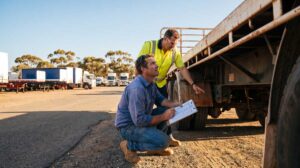
Working through this list methodically and documenting each point with photos gives you a record to refer back to. For higher value units, an independent inspection by a qualified heavy vehicle mechanic is money well spent. It is far cheaper to identify problems before purchase than to discover them after the money has changed hands.
For a broader look at how trailer configurations perform under Australian conditions, the triple side tipper article on Australia’s toughest roads covers side tipper work but the general principles about heavy duty build quality apply across trailer types.
Costs, Ownership, and Resale Realities
Purchase price is only the beginning of what a drop deck trailer will cost you over its working life. Understanding the full ownership picture up front helps you make a sensible decision rather than being surprised by ongoing costs later.
For a detailed look at trailer pricing across the market, the guide on how much truck trailers cost in Australia breaks down typical price ranges for different trailer types and highlights the factors that shape pricing. Drop decks generally sit toward the higher end of standard trailer pricing because of the more complex chassis design, and widening configurations sit higher again because of the additional mechanism.
Beyond purchase price, ongoing costs include tyres, servicing, brake components, air system maintenance, hydraulic servicing on widening units, and general consumables. Long distances on rough surfaces eat tyres faster than short cycles on sealed roads, and heavy duty applications are harder on running gear than lighter work. Budget for these ongoing costs realistically rather than assuming the trailer will run itself for years.
Insurance and registration form part of the annual cost. Premiums vary depending on trailer type, value, usage pattern, and driver profile. Registration costs vary by combination and jurisdiction. Both should be factored in when comparing trailers or building a business case.
Resale value is worth thinking about even at the purchase stage. A trailer that has been maintained well, has good records, is a popular configuration, and presents cleanly will command a premium when it is time to sell. Niche configurations, poor maintenance history, and evident hard use all reduce resale. If ownership return matters to your business case, treat resale as part of the ownership plan from the beginning.
Frequently Asked Questions
What is the main advantage of a drop deck trailer over a flat top?
The main advantage is the lower main deck height, which gives extra vertical clearance for tall loads. This makes drop decks better suited to machinery, tall freight, and oversized plant that would exceed height limits on a flat top. The trade off is slightly less cargo volume overall because the front step area is not usable for general freight.
Do I need a widening drop deck or a standard fixed width one?
It depends on whether you regularly carry oversized loads. If your work includes mining equipment, wide plant, or other cargo that exceeds standard trailer width, a widening configuration opens up work that a fixed width trailer cannot handle. If your loads always fit within standard width, a fixed width unit delivers better value.
How do I know if a used drop deck trailer has been overloaded in the past?
Look for signs of chassis deformation, particularly around the neck and main rails. Cracked or repaired welds, uneven deck wear, damaged tie down points, and evidence of body work that seems to be covering repairs are all warning signs. An independent inspection by a qualified heavy vehicle mechanic is worth the cost for higher value units.
Can a drop deck trailer be used for road train work?
Only if it is rated and equipped for that duty. Road train work requires appropriate mass ratings, coupling arrangements, axle group loads, and running gear spec. A trailer rated for single trailer work is not necessarily suitable for higher combination masses under permit. Always check the compliance plate and get engineering confirmation where in doubt.
How long should a properly maintained drop deck trailer last?
A quality heavy duty drop deck trailer used within its design ratings and maintained properly can give many years of productive service, often well over a decade for structural life. Consumables and running gear will cycle through several times during that period. Poor maintenance, overloading, or use in the wrong environment can shorten that life significantly.