Answer-first summary: Truck trailers in Australia can cost from about $20,000 to $40,000 for older used general-purpose units, $50,000 to $150,000 for many practical used semi-trailers, and $90,000 to $250,000+ for new or specialised trailers. The real cost depends on the freight task, condition, registration, repairs, modifications and whether the trailer is ready to work.
Author: Western Truck Sales Editorial Team
Reviewed for: Trailer pricing, registration, buyer checks, finance and modification considerations
Last updated: 21 July 2026
If you are asking how much truck trailers cost, the useful answer is a range, not one neat number. Older used trailers can start around $20,000 to $40,000. Many practical used semi-trailers sit between $50,000 and $150,000. New general freight trailers often start around $90,000 to $120,000 and can move well past $150,000 once you add the right specification, body type, running gear, hydraulics, safety systems or freight-specific equipment.
That is the price answer. The yard answer is simpler: what does the trailer need to do, what condition is it in, and what will it cost before it is earning?
At Western Truck Sales, we deal with new and used truck trailers and machinery here in Western Australia. Buyers are usually not chasing a number for the sake of it. They want to know whether the trailer will suit their transport requirements, whether it needs work, whether finance makes sense and whether it can be modified to do the job properly.
Cheap trailers can be good buying. Cheap mysteries are a different sport.
Quick Price Guide
Use these figures as planning ranges, not quotes. The real number depends on age, condition, specification, availability, registration, repairs and whether any accessories or modifications are required.
| Trailer type | Typical used range | Typical new range | Common use |
| Flat top semi-trailer | $25,000-$90,000 | $90,000-$160,000 | General freight, steel, machinery, pallets and farm work |
| Drop deck trailer | $35,000-$120,000 | $110,000-$190,000 | Taller freight, machinery and mixed loads |
| Curtainsider / tautliner | $45,000-$160,000 | $130,000-$230,000 | Pallet freight, weather protection and side loading |
| Skeletal / container trailer | $25,000-$100,000 | $90,000-$170,000 | Shipping containers |
| Tipper trailer | $50,000-$180,000 | $140,000-$280,000+ | Civil, quarry, grain and bulk material work |
| Tanker trailer | $80,000-$250,000+ | $200,000-$450,000+ | Fuel, water, chemical, dry bulk or food-grade liquid work |
| Low loader / float | $60,000-$250,000+ | $180,000-$400,000+ | Plant, machinery and heavy equipment |
| B-double set | $100,000-$350,000+ | $250,000-$600,000+ | Linehaul and high-volume freight |
The trailer itself is only one line in the budget. Registration, tyres, brakes, finance, insurance, roadworthy checks, accessories, modifications and downtime all count.
Why Truck Trailer Prices Vary So Much
Two trailers can look similar online and still be very different once you stand next to them. One might be ready to go. The other might need tyres, brake work, an air leak fixed and a gate that has had one too many arguments with a loader.
The biggest price drivers are:
- Trailer type and body style.
- New or used condition.
- Age and service history.
- Chassis and deck condition.
- Axle and suspension setup.
- Brake system and EBS/ABS condition.
- Tyres and rims.
- Registration and roadworthy status.
- Load restraint setup.
- Hydraulics, ramps, gates, roll-tarps, grain extensions or other accessories.
- Suitability for B-doubles, road trains, triple road trains, mine specs, farm work or general transport.
- Whether modifications are required before work.
A basic flat top will usually cost less than a refrigerated trailer, tanker or tipper because there is less equipment attached to it. A tipper or tanker is a different animal. Hydraulics, body wear, cleaning history, stability and compliance all matter.
New vs Used Truck Trailers
New trailers give you more control. You can specify the trailer around the load, the truck, the route and the work. That can make sense if the trailer will be core equipment for the business and needs to be set up properly from day one.
Used trailers can make just as much sense when the condition is right and the price leaves room for any work that needs doing. Many buyers want stock they can look at, compare and put to work sooner.
| Buying path | Best fit | Main advantage | Main risk |
| New trailer | Long-term core fleet work | Built around the exact job | Higher upfront cost and possible lead time |
| Used trailer | Faster availability or lower upfront spend | Lower purchase price when condition is right | Hidden repairs or downtime |
| Hire or lease | Seasonal jobs or temporary contracts | Flexibility without full ownership | Less control over long-term setup |
No one opens a surprise workshop bill and thinks, beautiful, exactly what this month needed.
Before buying used, inspect the trailer properly. A lower price is only useful if the trailer is structurally sound, compliant and close to ready for work.
What Does a Used Truck Trailer Cost?
Older used trailers often start around $20,000 to $40,000, especially for simple flat tops, skeletal trailers or older units with cosmetic wear. They can be good buying if the bones are right.
Mid-market used trailers often sit between $50,000 and $120,000. This is where many buyers find the practical middle: useful remaining life without paying new-trailer money.
Late-model or specialised used trailers can push beyond $150,000. That is common for tankers, modern tippers, low loaders, quality drop decks, refrigerated equipment and trailers set up for heavier work.
The best question is not “what is the cheapest trailer?” It is “what will this cost by the time it is ready to hook up and work?”
What Does a New Truck Trailer Cost?
New general freight trailers often start around $90,000 to $120,000, then move up depending on the build. Curtainsiders, drop decks, tankers, tippers, low loaders and specialised trailers can sit well above $150,000. Custom work, PBS requirements and heavy-duty configurations can push pricing much higher.
New pricing is shaped by:
- Steel and material costs.
- Body length, height and tare weight.
- Axle and suspension package.
- Brake and safety system requirements.
- Paint and finish.
- Gates, ramps, curtains, decks or toolboxes.
- Hydraulic or electrical systems.
- Load restraint needs.
- Road train, B-double or mine specification requirements.
- Whether accessories need to be supplied and fitted.
This is where speaking to a dealer helps. A trailer that almost suits the job can cost money every week. A trailer set up properly from the start usually causes fewer headaches.
Trailer Registration Cost
Trailer registration cost depends on the state or territory, trailer type, heavy vehicle category, inspection requirements and transfer or plate fees. There is no single number that covers every trailer.
That is why searches like trailer registration cost, trailer rego cost QLD, trailer rego cost NSW and trailer registration NSW cost all need state-specific checking.
When budgeting, allow for:
- Registration charge.
- Plate fees.
- Inspection or roadworthy costs.
- Transfer fees.
- CTP or applicable insurance components.
- Duty or stamp duty treatment.
- Heavy vehicle category.
- Renewal timing.
- Any compliance checks before the trailer can work.
Paperwork is not the exciting part of buying a trailer. Unfortunately, registration offices have not yet agreed to run on good vibes.
Other Costs Buyers Forget
The purchase price is the loud number. The quiet numbers come after.
Tyres
A tri-axle semi-trailer can need 12 tyres. If they are worn, mismatched or close to replacement, price that before you buy.
Brakes
Brake condition affects safety, compliance and downtime. Check drums or discs, linings, hoses, tanks, leaks, slack adjusters and ABS/EBS warnings.
Suspension
Airbag suspension is useful, but airbags, bushes, shocks, valves and ride-height parts all wear. Mechanical suspension still needs a proper look.
Load Restraint
Chains, straps, gates, posts, curtains, winches, headboards and rated anchor points need to suit the load. A trailer that cannot carry the freight safely is not ready.
Hydraulics and Accessories
If the job needs hydraulics, grain extensions, roll-tarps, gates or other accessories, include supply and fitting in the real budget.
Finance and Insurance
Finance can help a business get the right gear sooner, but repayments need to match the work the trailer will do. Insurance depends on value, use, freight type, radius, storage and claims history.
How Trailer Type Changes the Price
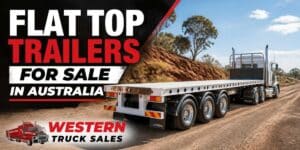
Flat Top Trailers
Flat tops are flexible and usually among the more affordable heavy trailer types. They suit general freight, steel, timber, machinery, pallets and farm work. Check the deck, chassis, tyres, brakes, suspension and load restraint points.
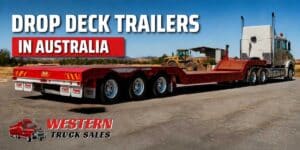
Drop Deck Trailers
Drop decks cost more because the frame is more specialised. They help when height matters or when you are moving machinery and mixed loads.
Tanker Trailers
Tanker trailers are specialised. Water, fuel, chemical, food-grade and dry bulk work all bring different compliance, cleaning and maintenance considerations.
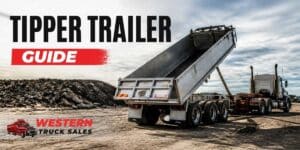
Tippers and Side Tippers
Tippers work hard. Body wear, hoist condition, hydraulics, cracking, tailgate setup and tare weight all affect value.
Low Loaders and Floats
Floats and low loaders are built around machinery. Capacity, deck height, ramps, widening gear, axles and suspension all matter.
Dog and Pig Trailers
Dog and pig trailers can be useful behind tip trucks, 6 wheelers and farm or civil setups. Suitability depends on the towing vehicle, load, registration and intended use.
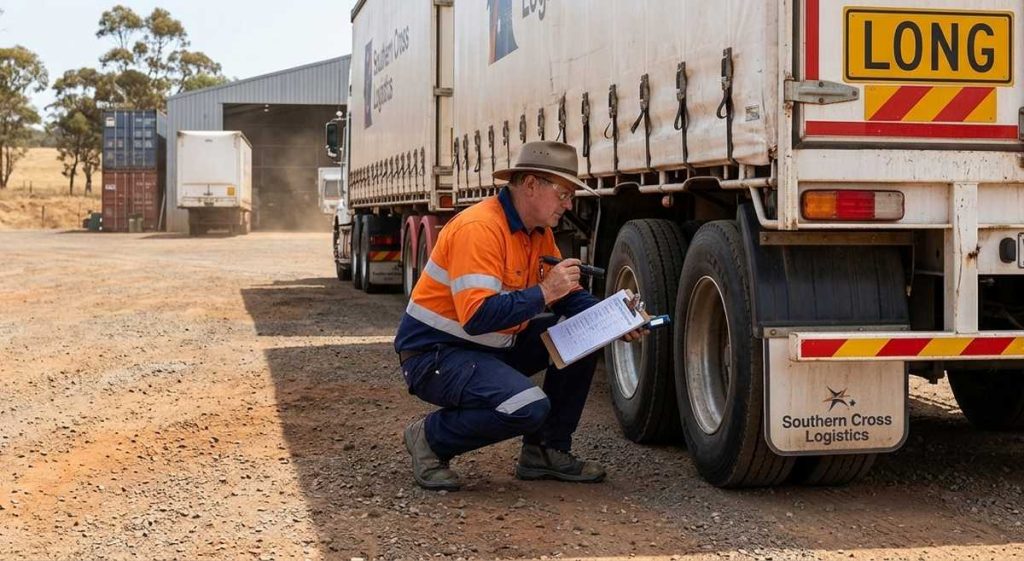
How to Inspect a Used Truck Trailer Before Buying
Before you talk final price, inspect the trailer like it needs to work tomorrow.
Start with the chassis. Look for cracks, bends, corrosion, fatigue, old repairs and fresh paint that may be doing more public relations than structural work.
Then check running gear. Inspect tyres, rims, hubs, brakes, suspension, airbags, bushes, shocks, axle alignment, air leaks and electrical connections. Test lights, ABS/EBS warnings and air pressure.
For the body, check the deck, gates, roof, curtains, doors, seals, ramps, hydraulics, hoists, toolboxes and load restraint points.
Ask for:
- Service history.
- Roadworthy or inspection paperwork.
- Registration status.
- VIN and chassis details.
- Repair invoices.
- Tyre age and condition.
- Brake service records.
- Hydraulic records, if applicable.
- Any defect history.
If you are not confident inspecting it yourself, pay someone who is. It is cheaper than buying a problem with wheels.
How to Work Out the Real Cost
The cleanest way to compare trailers is to calculate the practical first-year cost.
Practical first-year cost = purchase price + repairs + registration + insurance + finance cost + accessories + expected downtime
| Cost item | Trailer A | Trailer B |
| Purchase price | $55,000 | $72,000 |
| Immediate tyres/brakes | $14,000 | $2,000 |
| Registration and transfer | $3,000 | $3,000 |
| Accessories or load restraint | $4,000 | $1,000 |
| Estimated downtime | $5,000 | $1,000 |
| Practical first-year cost | $81,000 | $79,000 |
Trailer A looked cheaper. Trailer B was probably the better buy.
The numbers need to work in the yard, on the road and in the bank account.
Should You Buy, Finance, Lease or Hire?
Buying outright gives control and avoids interest, but it ties up capital.
Finance can help match the cost of the trailer to the income it will generate, provided the work is there.
Hire can make sense for seasonal jobs, short-term contracts or situations where you need equipment but do not want to own it long term.
Western Truck Sales can help buyers look at stock, finance options and whether a trailer needs modification before work.
How Much Should You Budget?
For a first general-purpose used trailer, a practical budget might be $60,000 to $120,000 once repairs, registration and setup are included.
For a new general freight trailer, plan from roughly $120,000 to $220,000 depending on specification.
For tippers, tankers, low loaders, B-double, road train, mine-spec or heavily modified equipment, expect a wider range and get advice before comparing prices.
The mistake is budgeting only to buy the trailer. Budget to put it to work.
Buyer Checklist
Before you commit, ask:
- What load will the trailer carry most often?
- What truck will tow it?
- What routes will it run?
- Does it need B-double, road train or mine specification suitability?
- Does it need hydraulics, roll-tarps, gates or other accessories?
- What registration and inspection costs apply?
- What repairs are needed before work?
- What is the tyre and brake condition?
- Can it be financed and insured for the intended work?
- Is it cheaper to buy, finance or hire for this job?
Common Mistakes When Buying Truck Trailers
The first mistake is buying on price alone. A low price can be a good thing, but not if the trailer needs a long workshop stay before it earns a dollar.
The second mistake is buying the wrong setup. A trailer that almost suits the work can cost money every week through awkward loading, poor payload, access restrictions or extra downtime.
The third mistake is forgetting modifications. If the job needs hydraulics, grain extensions, gates, roll-tarps or mine-spec changes, include those before deciding what the trailer really costs.
The fourth mistake is not looking at the gear properly. Photos help, but standing next to the trailer and asking the right questions helps more.
FAQs
How much do truck trailers cost in Australia?
Used truck trailers can start around $20,000 to $40,000 for older simple units. Many practical used semi-trailers sit between $50,000 and $150,000. New trailers commonly range from about $90,000 to $250,000+, with specialised builds costing more.
What is the cheapest type of truck trailer?
Older flat top and skeletal trailers are often among the cheapest heavy truck trailers because they are mechanically simpler and have less bodywork than tippers, tankers, low loaders or curtainsiders.
Why do some used trailers cost so much more than others?
Condition, age, running gear, tyres, brakes, body type, registration status, accessories and suitability for heavy work all change the price. A late-model trailer that is ready for work can cost more but still be better value.
What affects trailer registration cost?
Trailer registration cost depends on the state or territory, trailer category, heavy vehicle classification, inspection requirements, plate fees and the applicable registration scheme.
Should I buy a new or used truck trailer?
Buy new when exact specification and long-term use matter most. Buy used when the trailer suits the job, passes inspection and leaves room in the budget for repairs, registration and accessories.
Should I inspect a used trailer before buying?
Yes. Check the chassis, running gear, brakes, tyres, suspension, air system, lights, body condition, load restraint, registration status and service history. If you are unsure, get an independent inspection.
Final Word
So, how much do truck trailers cost? For most Australian buyers, a realistic starting budget is about $50,000 to $120,000 for a practical used trailer and $120,000 to $220,000 for many new general freight trailers. Specialised trailers can go much higher.
But the better question is: what trailer suits the work, what needs doing before it hits the road, and what will it cost once the real numbers are included?
If you are in WA, call Western Truck Sales on 0417 920 022 or come and see the range at 85 Pickering Brook Road, Pickering Brook. Avoid the city chaos, look at the gear properly and talk to the team about what suits your transport requirements.