Not every trailer in your operation needs to belong to you. That statement cuts against the instinct of most Australian transport operators, who have been raised on the principle that owning your equipment means controlling your costs. And for core assets that run every day, that principle holds. But for the trailer you need for a three-month contract, the drop deck you require for a single machinery relocation, the extra tipper capacity you need during harvest season, or the specialised unit you cannot justify purchasing for occasional use, ownership is not a smart financial decision. It is a capital trap.
The mathematics of trailer ownership are unforgiving. A new general freight semi-trailer costs anywhere from $90,000 to over $220,000 depending on specification. A quality used unit sits between $50,000 and $150,000. On top of the purchase price, you carry registration, insurance, maintenance, tyre replacement, storage when the trailer is idle, and depreciation that begins the day you sign. If that trailer earns revenue five days a week, fifty weeks a year, ownership makes sense. If it sits idle for months between jobs, every week it is parked costs you money while generating nothing.
Truck trailer hire flips this equation. You pay for the trailer when you need it. You return it when you do not. You avoid the capital outlay, the depreciation, the idle storage, and the maintenance obligation. And you gain the flexibility to scale your fleet up and down as your workload demands, rather than building a fleet sized for your peak and paying for it during your troughs.
This guide examines when hiring makes more commercial sense than buying, how to evaluate the decision for your specific operation, what to look for in a hire arrangement, and how to integrate hired trailers into a fleet strategy that balances cost control with operational capability.
When Truck Trailer Hire Makes Commercial Sense
Hiring is not a compromise. It is a strategic choice that suits specific operational circumstances better than ownership. Understanding which circumstances apply to your business is the starting point for making the right decision.
The Scenarios Where Hiring Wins
Not every situation calls for ownership. Here are the most common scenarios where hiring delivers a better commercial outcome.
- Project-based work with a defined end date. If you have won a six-month construction contract that requires an additional tipper or drop deck, hiring for the contract duration avoids purchasing an asset you may not need once the project ends.
- Seasonal demand spikes. Agricultural operations that need grain trailers during harvest, or construction businesses that experience summer peaks in activity, can hire additional capacity for the busy period and return the trailers when demand subsides.
- Testing a new market or service line. Before committing capital to a new trailer type, hiring lets you test whether the work is there, whether the trailer specification suits the application, and whether the revenue justifies a purchase.
- Bridging a gap while a new trailer is being built. Custom-built or order-to-specification trailers can take months to arrive. Hiring a comparable unit keeps you operational while you wait.
- Cash flow preservation. Early-stage businesses, operators recovering from a downturn, or companies managing tight cash flow may need the trailer’s earning capacity without the upfront capital commitment that purchase requires.
- Specialised equipment for occasional use. A low loader, a widening drop deck, or a tanker trailer that you need a few times a year does not justify the purchase, registration, maintenance, and insurance costs of ownership when it can be hired as needed.
- Scaling for a tender or contract requirement. Winning a large contract may require fleet capacity that exceeds your current assets. Hiring additional trailers lets you meet the contract requirements without over-capitalising your fleet.
The Financial Comparison Between Hiring and Buying
The hire-versus-buy decision is ultimately a financial one, and running the numbers for your specific situation is essential. Here is a framework for comparing the two approaches.
Cost Comparison Table: Buying vs Hiring a Standard Triaxle Flat Top
| Cost Element | Buying (New) | Buying (Used) | Hiring |
| Upfront cost | $120,000-$180,000 | $50,000-$120,000 | $0 |
| Monthly finance payment (5-year term) | $2,200-$3,300 | $920-$2,200 | N/A |
| Monthly hire cost | N/A | N/A | $3,500-$6,000 |
| Registration (annual) | $1,500-$3,000 | $1,500-$3,000 | Included |
| Insurance (annual) | $2,500-$5,000 | $2,000-$4,000 | Included |
| Maintenance (annual) | $3,000-$6,000 | $5,000-$10,000 | Included |
| Tyres (annual estimate) | $3,000-$5,000 | $3,000-$5,000 | Included |
| Depreciation (annual) | $12,000-$18,000 | $5,000-$10,000 | $0 |
| Idle cost when not earning | Full carrying cost continues | Full carrying cost continues | $0 (trailer returned) |
The numbers reveal a clear pattern. When the trailer is working full-time, ownership costs less per month than hiring because the hire rate includes the provider’s margin, maintenance, and profit. But when the trailer is idle, ownership continues to cost you in finance payments, registration, insurance, and depreciation, while hiring costs nothing because you have returned the trailer.
The breakeven point for most general freight trailers sits at approximately 8 to 10 months of continuous use per year. If you will use the trailer for more than this, buying is typically cheaper over the long term. If your usage falls below this threshold, hiring delivers better value.
For a detailed breakdown of what trailer purchases actually cost across different types and conditions, the complete guide to truck trailer costs in Australia provides current pricing benchmarks.
The Hidden Costs of Ownership That Hiring Eliminates
The purchase price and finance payments are the visible costs of ownership. But several hidden costs tip the balance further toward hiring for operators with intermittent or variable demand.
Storage when idle. A trailer that is not working still needs somewhere to sit. If you do not have yard space, storage costs $200 to $500 per month. If you do have yard space, that space has an opportunity cost because it could be used for something productive.
Maintenance during idle periods. Even a parked trailer requires periodic attention. Tyres degrade from UV exposure. Brakes seize from disuse. Grease dries out. Air systems lose pressure. Reactivating an idle trailer often requires servicing before it can return to work.
Capital tied up in a depreciating asset. Money spent on a trailer that sits idle for four months of the year is money that could have been invested in the business, used to fund a more productive asset, or kept as working capital for cash flow management.
Obsolescence risk. Regulations, customer requirements, and industry standards evolve. A trailer purchased today may not meet the specifications required by a contract you win in three years. Hiring avoids the risk of owning equipment that no longer meets market or compliance requirements.
How Hiring Fits Into a Broader Fleet Strategy
The most sophisticated fleet operators do not choose between hiring and buying. They use both, strategically, to build a fleet that is sized and configured for maximum efficiency.
The Core-Plus-Flex Model
The most effective approach for many businesses is to own the core trailers that work every day and hire additional capacity for peaks, projects, and specialised tasks. This model ensures your owned fleet is fully utilised, generating maximum return on invested capital. Your hired fleet scales up and down with demand, so you never pay for idle capacity. Your capital investment is concentrated on the assets with the highest utilisation, and your fleet can respond to new opportunities without requiring a capital commitment for every new contract.
For example, a construction company might own two drop decks and a tipper that work continuously across its projects, while hiring an additional tipper for a major earthmoving contract and a widening drop deck for a one-off oversized machinery relocation. The owned trailers provide the reliable base. The hired trailers provide the flex.
Seasonal Scaling
Agricultural operators face the most pronounced seasonal demand patterns in the trailer market. Grain harvest may require four or five trailers for six to eight weeks, while the rest of the year requires one or two. Owning a fleet sized for peak harvest means carrying three idle trailers for ten months of the year. Owning one or two trailers and hiring the rest for harvest delivers the same peak capacity at a fraction of the annual cost.
The same principle applies to construction businesses that experience summer peaks, logistics operators managing Christmas freight surges, and mining support companies that scale up for specific project phases.
Contract-Matched Fleet Sizing
Every new contract presents a fleet sizing decision. If the contract requires three trailers for twelve months, do you buy three or hire three? The answer depends on whether the work will continue beyond the contract term, whether the trailer type matches your existing fleet and future pipeline, whether you have the capital available without constraining other parts of the business, and whether the contract margins support the higher cost of hiring versus the lower ongoing cost of ownership.
For operators evaluating which trailer type matches their business, the hire-versus-buy question should be part of that evaluation from the beginning, not an afterthought once the specification is finalised.
What to Look for in a Hire Arrangement
Not all hire arrangements are equal, and the terms you agree to directly affect the value you receive and the risks you carry.
Key Terms:
- Hire period and minimum term. Most commercial trailer hires operate on a minimum term of one to three months for standard equipment. Shorter hires may attract a premium rate. Longer hires should attract a discounted rate.
- Rate structure. Rates may be quoted daily, weekly, or monthly. For commercial trailer hire, monthly rates are standard for extended hires. Ensure the rate is clear and includes or excludes GST.
- What is included in the rate. A comprehensive hire rate should cover the trailer itself, registration, insurance (confirm the level and any excess), and routine maintenance during the hire period. Some providers include tyres; others charge for tyre replacement separately.
- Damage and excess. Understand who is responsible for damage during the hire period and what excess applies if the trailer is damaged or involved in an accident. Your own insurance may cover hired equipment, but confirm this with your insurer before relying on it.
- Delivery and collection. Confirm whether the provider delivers the trailer to your site and collects it at the end of the hire, and whether these services are included in the rate or charged separately.
- Condition at commencement. The trailer should be delivered in a roadworthy condition, compliant with all relevant Australian Design Rules, and with current registration. Inspect the trailer thoroughly at handover, document its condition with photographs, and note any pre-existing damage.
- Maintenance during the hire. Clarify who is responsible for servicing during the hire period. For longer hires, routine maintenance such as grease, tyre pressures, and brake checks may fall to you, while the provider retains responsibility for mechanical repairs and component failures.
- End-of-hire process. Understand what condition the trailer must be in when returned, what constitutes fair wear versus damage, and how the end-of-hire inspection is conducted. This mirrors the property condition report process in a rental tenancy and protects both parties from disputed claims.
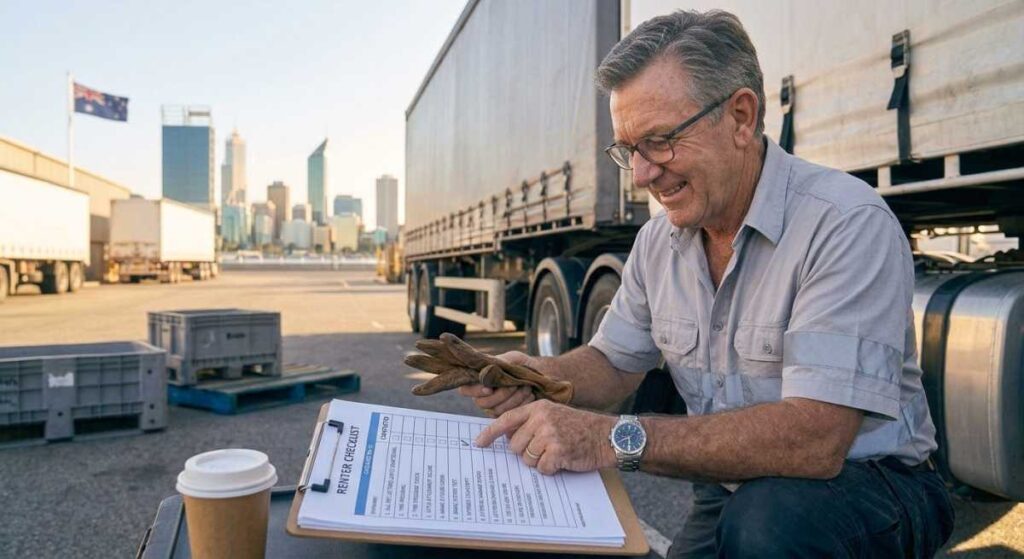
Hire Arrangement Checklist
| Item | What to Confirm |
| Minimum hire period | 1 month, 3 months, or negotiable |
| Rate | Daily/weekly/monthly, inclusive or exclusive of GST |
| Registration | Current and included in rate |
| Insurance | Included, level of cover, excess amount |
| Routine maintenance | Who is responsible during hire |
| Mechanical repairs | Provider’s obligation during hire |
| Tyres | Included in rate or charged separately |
| Delivery/collection | Included or additional charge |
| Condition report | Completed at start and end of hire |
| Termination | Notice period if ending hire early |
Industry-Specific Hire Applications
Different industries use trailer hire in different ways. Understanding how hire works in your sector helps you identify opportunities you may not have considered.
Construction and Civil Works
Construction is one of the heaviest users of trailer hire in Australia. Projects have defined timelines, variable equipment requirements, and unpredictable scope changes that make permanent fleet sizing difficult.
Common hire scenarios include additional tippers for a major earthmoving phase, drop decks for machinery mobilisation and demobilisation, flat tops for delivering structural steel, precast, and building materials during peak construction activity, and specialised low loaders for one-off oversized equipment moves.
For construction operators evaluating tipper options, understanding how to pick the right side tipper for WA conditions ensures you hire a unit that matches the specific demands of your project rather than accepting whatever is available.
Agriculture
The seasonal nature of agricultural transport makes it one of the most compelling use cases for trailer hire. Grain harvest creates a short, intense demand spike that requires multiple trailers for a period of weeks to months, followed by months of minimal trailer use.
Owning four grain trailers that work for eight weeks and sit idle for the remaining forty-four is a poor use of capital. Owning one and hiring three for harvest achieves the same peak capacity while dramatically reducing annual costs.
Mining and Resource Support
Mining projects operate in phases, and the trailer requirements for each phase can differ significantly. The mobilisation phase may require low loaders and drop decks. The operational phase may require side tippers and water tankers. And the demobilisation phase repeats the heavy haulage requirements. Hiring trailers matched to each phase allows the fleet to flex without carrying idle assets between phases.
Freight and Logistics
Freight operators use trailer hire to manage demand fluctuations, test new routes, and cover capacity gaps during fleet maintenance. A logistics business that loses a curtainsider to a major service for two weeks can hire a replacement and keep its delivery commitments intact rather than losing revenue while the owned unit is off the road.
For freight operators considering which flat deck trailer suits their general freight needs, hiring before buying provides an opportunity to test the specification in your actual operation before committing capital.
Making the Transition From Pure Ownership to a Hybrid Model
If your business currently owns all its trailers, transitioning to a hybrid model does not require a dramatic change. It can start with a single decision: the next time you need additional capacity, hire instead of buying and measure the result.
Step-by-Step Transition
- Audit your current fleet utilisation. For each trailer you own, calculate how many days per year it actually works versus how many days it sits idle. Any trailer with utilisation below 70 per cent is a candidate for replacement with a hire arrangement.
- Identify your core fleet. These are the trailers that work every day, that are essential to your primary contracts, and that justify the full cost of ownership through consistent revenue generation.
- Identify your flex requirements. These are the seasonal peaks, project-based needs, and specialised applications that generate intermittent demand. These are where hiring delivers the most value.
- Model the financials. Compare the annual cost of owning your flex trailers (including finance, registration, insurance, maintenance, storage, and depreciation) against the cost of hiring equivalent trailers for only the periods you actually use them.
- Test with one hire. The next time you need additional capacity, hire the trailer instead of buying it. Track the costs, evaluate the experience, and compare the result against what ownership would have cost.
- Refine your model. Based on the results, adjust the balance between owned and hired trailers to optimise your fleet for cost, flexibility, and capability.
For operators who decide that ownership is the right call for their core fleet, the pre-purchase checklist for WA trailer buyers ensures you make that purchase with confidence. And for those who want to explore what is currently available to purchase, the full stock listing provides an up-to-date view of trailers in stock.
Common Mistakes Operators Make With Trailer Hire
Understanding what goes wrong helps you avoid the pitfalls that undermine the value of hiring.
- Hiring without checking the trailer’s condition at handover. Always inspect and photograph the trailer before accepting it. Pre-existing damage that is not documented at the start of the hire may be attributed to you at the end.
- Not confirming what is included in the rate. A headline rate that excludes insurance, registration, or maintenance is not a true comparison against a rate that includes everything. Ensure you are comparing total cost, not just the daily or monthly figure.
- Hiring the wrong specification. A trailer that does not match your cargo type, your route requirements, or your prime mover configuration wastes money even at a competitive hire rate. Define your requirements before you call the hire provider.
- Defaulting to ownership out of habit. Many operators buy trailers because that is what they have always done, without evaluating whether hiring would deliver a better commercial outcome for the specific situation. Challenge the assumption every time.
- Not negotiating the rate for longer hires. Hire rates are negotiable, particularly for extended terms. A three-month hire should cost less per month than a one-month hire. A six-month hire should cost less again. Ask for a term discount before accepting the quoted rate.
For operators weighing the hire-versus-buy decision alongside broader fleet questions, the truck trailer FAQ guide addresses the most common questions and considerations.
When Buying Is Still the Right Decision
This guide makes a strong case for hiring, but it is not the right choice in every situation. Buying remains the better option when the trailer will be used continuously, five or more days per week, for the foreseeable future. When the specific configuration you need is not readily available for hire. When your contracts require you to demonstrate ownership of fleet assets. When the cost of hiring over the expected period of use exceeds the total cost of ownership. And when the trailer type you need holds its value well, making the eventual resale or trade-in a significant offset against the purchase price.
The decision is not ideology. It is arithmetic. Run the numbers for your specific situation, considering every cost element over the relevant time period, and the answer will be clear.
If you are leaning toward buying, understanding what to look for when purchasing a drop deck or browsing the complete range of trailers available ensures you make the purchase with full information.
Frequently Asked Questions
How much does it cost to hire a truck trailer in Australia?
Commercial truck trailer hire rates vary by trailer type, specification, hire duration, and location. As a general guide, a standard triaxle flat top or drop deck hires for approximately $3,500 to $6,000 per month on an extended hire arrangement. Tippers, tankers, and specialised trailers may attract higher rates depending on specification and availability. Shorter hires cost more per day or week. Longer hires typically attract discounted monthly rates. The rate should include registration, insurance, and routine maintenance, but confirm this with the provider before committing.
What is the breakeven point between hiring and buying a trailer?
For most general freight trailers, the breakeven sits at approximately 8 to 10 months of continuous use per year. If your trailer will work more than this, buying is typically cheaper over the long term because you avoid paying the hire provider’s margin. If your trailer will work less than this, hiring delivers better value because you avoid paying ownership costs during idle periods. The exact breakeven depends on the purchase price, finance terms, maintenance costs, and the hire rate available for a comparable unit.
What should I check before accepting a hired trailer?
Inspect the trailer thoroughly at handover. Check the structural condition of the chassis, the body, and the deck. Inspect the tyres, brakes, suspension, lights, and coupling. Confirm that the registration is current and that the trailer is roadworthy. Document the condition with dated photographs, noting any pre-existing damage, wear, or deficiencies. This documentation protects you from being held responsible for damage that existed before the hire commenced.
Can I hire a trailer for a single job or do I need a minimum term?
Most commercial trailer hire providers operate on minimum terms, typically one to three months for standard equipment. Some providers offer shorter arrangements for specific situations, though the daily or weekly rate will be higher than the equivalent monthly rate. For a single machinery move requiring a low loader or drop deck, a short-term hire may be available at a premium rate. Discuss your specific requirements with the provider to understand the options.
Does hiring affect my ability to win contracts that require fleet evidence?
Some contracts, particularly government tenders and large corporate logistics agreements, require tenderers to demonstrate fleet ownership or access to a defined number of vehicles. Hired trailers may or may not satisfy this requirement depending on the contract terms. If the tender specifies “owned fleet,” hired trailers will not qualify. If it specifies “available fleet” or “accessible fleet,” hired trailers supported by a hire agreement may be accepted. Review the contract requirements carefully and, if in doubt, clarify with the contracting party before submitting your tender.