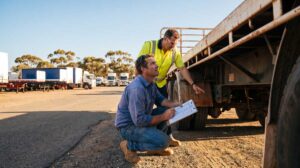
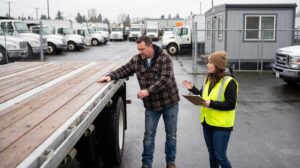
Ask any experienced fleet manager in Australia what the single most versatile trailer type in their yard is, and there is a very good chance they will point to the flatbed. No sides. No roof. No fuss. Just a solid, open platform that can carry almost anything that can be legally loaded onto it and properly restrained for the road.
From construction sites in the suburbs to mining access roads in the outback, the flatbed trailer has earned its reputation as the workhorse of the Australian transport industry. It handles loads that would be impossible or impractical to move in any enclosed trailer, and it does so with a simplicity of design that keeps maintenance costs manageable over a long working life.
This guide is for operators, fleet buyers, and owner-drivers who want a practical, honest overview of flatbed trailers in Australia. Whether you are shopping for your first unit or adding to an established fleet, we cover what matters: configurations, specs, legal requirements, load types, and what to look for when the time comes to buy. If you are still at the early stages of budgeting, the overview of the cost of truck trailers in Australia is a useful place to start.
What Is a Flatbed Trailer?
A flatbed trailer is exactly what the name suggests: a trailer with a flat, open load platform and no permanent sides, ends, or overhead structure. The load deck sits at a consistent height along its entire length, and loads are secured using chains, straps, binders, and anchor points built into the deck frame.
This open design is the source of both the flatbed’s greatest strength and its key limitation. Because there are no sides to remove or work around, almost any shape or size of load can be positioned on the deck, making the flatbed enormously flexible. The trade-off is that every load must be properly restrained by the operator before transport, and the trailer offers no inherent protection against the elements.
In Australia, flatbed trailers are used across construction, mining, agriculture, infrastructure, manufacturing, and heavy industry. The flatbed truck trailer combination — a prime mover paired with a flatbed semi-trailer — is one of the most common sights on Australian roads, particularly on regional highways and resource roads where oversized and unusual loads are a routine part of operations.
Types of Flatbed Trailers Available in Australia
Standard Flat Top Semi-Trailer
The standard flat top semi-trailer is the baseline configuration. It connects to a prime mover via a fifth wheel coupling, has a consistent deck height across its length, and is available in a range of lengths from around 12 metres up to the legal maximum for a single semi-trailer combination. This is the configuration most people picture when they think of a flatbed truck trailer working on an Australian highway.
Flat top semi-trailers are built to carry heavy, bulky, or irregularly shaped loads that do not fit in curtainsiders or tautliners. Structural steel, precast concrete, machinery, pipe bundles, and timber packs are among the most common loads. The flat top gives operators the flexibility to use crane lifts, side loaders, and forklifts to load from any direction, which makes it practical across a huge range of sites and loading environments.
Tandem Axle Flatbed Trailer
The tandem axle flatbed sits below the semi-trailer in size and is typically used behind a rigid truck or as a tag trailer in a truck-and-dog combination. Tandem axle flatbeds are popular with construction and earthmoving operators who need to move plant and equipment between sites but do not need the full capacity of a semi-trailer combination.
The lighter tare weight of a tandem axle flatbed means that payload capacity is often comparable to or exceeding what a heavier configuration could legally carry on the same road, particularly on restricted-access routes where axle limits are tighter than GCM limits.
Triaxle Flatbed Trailer
Adding a third axle to a flatbed trailer increases the legal payload capacity by spreading the gross mass across more axle groups. Triaxle flatbed trailers are common in applications where loads are consistently at the heavier end of the weight range, such as large structural steel packages, heavy precast elements, or machinery. If you are considering whether a triaxle configuration suits your operation, the practical guide on buying a triaxle trailer in Australia covers the key decision points in detail.
Extendable Flatbed Trailer
For loads that exceed the standard trailer length, extendable flatbed trailers use a telescoping deck section that allows the overall length to increase, sometimes by several metres. These trailers are used for wind turbine blades, long bridge beams, structural members, and other elongated loads that simply cannot fit on a fixed-length deck.
Extendable flatbeds almost always require a special purpose vehicle permit when operated in the extended position. Route assessment, pilot vehicles, and travel time restrictions may apply depending on the overall length and the roads being used.
Widener or Expandable Flatbed
Some flatbed trailers are built with a deck that can be expanded in width, typically by sliding outer sections outward to increase the load platform width. These are used for agricultural headers, wide industrial components, and other loads that exceed standard trailer width. Operating an expanded widener requires an overwidth permit in all Australian states and territories.
What Are Flatbed Trailers Used For in Australia?
The range of loads carried on Australian flatbed trailers is genuinely broad. Some of the most common applications include:
Construction and Civil Infrastructure
Flatbed trailers are fundamental to construction logistics. Steel reinforcing, structural beams, precast panels, formwork, scaffolding, concrete elements, and construction equipment all move regularly on flatbeds. The open platform allows crane or forklift loading from any side, and the lack of height restrictions from walls or a roof means tall loads can be accommodated as long as they clear the road height limit.
Mining and Resources
In the mining sector, flatbed truck trailers carry everything from small plant and equipment to large process components, generator sets, and modular buildings. On remote resource roads, flatbeds are often the only practical way to move bulky equipment that cannot be dismantled or cannot fit in a standard enclosed trailer.
Agriculture
Large agricultural equipment, particularly wide headers, tillage equipment, and irrigation infrastructure, routinely moves on flatbed trailers. The flatbed’s open platform accommodates machinery that is wider than a standard enclosed trailer and that cannot be folded or reduced in size for transport.
Manufacturing and Heavy Industry
Industrial machinery, fabricated steel assemblies, pressure vessels, transformers, and process equipment all move on flatbeds. In many cases, these loads are too heavy for any enclosed trailer and require the structural deck strength and open loading access that only a flatbed provides.
Timber and Primary Industries
Large timber packs, pipe bundles, and primary industry products are commonly carried on flatbed trailers where their size, weight, or shape rules out enclosed options. The open deck allows side loading with forklifts, which is the standard loading method for many timber and pipe yards.
Key Flatbed Trailer Specifications: A Quick Reference
The table below outlines typical specifications for the most common flatbed trailer configurations used in Australia. Actual figures vary between manufacturers and specific builds, so always verify with the supplier before purchase.
| Configuration | Deck Length | Deck Height | Tare Weight | Approx. Payload |
| Tandem Axle Flat Top | 6–9 m | 900–1,050 mm | 3.5–5 t | Up to 10 t |
| Standard Semi Flat Top | 12–14 m | 1,350–1,500 mm | 8–10 t | 20–26 t |
| Triaxle Flat Top | 12–14 m | 1,350–1,500 mm | 9–11 t | 26–30 t |
| Extendable Flat Top | Up to 22+ m | 1,350–1,500 mm | 10–13 t | 20–28 t |
| B-Double Flat Top Set | ~26 m | 1,350–1,500 mm | 16–20 t | 42–48 t |
Note: payload figures are subject to road type, axle configuration, permit conditions, and state regulations. Always confirm legal load limits with the National Heavy Vehicle Regulator or your state road authority before dispatch.
Legal Requirements for Flatbed Trailers in Australia
All heavy vehicle operations in Australia are governed by the Heavy Vehicle National Law (HVNL), administered by the National Heavy Vehicle Regulator (NHVR). For flatbed trailer operators, the most relevant provisions relate to mass limits, dimension limits, and load restraint requirements.
Mass and Dimension Limits
The standard general access limits that apply to most flatbed trailer operations are:
● Maximum vehicle height: 4.3 metres
● Maximum vehicle width: 2.5 metres
● Maximum vehicle length: varies by configuration; 19 metres for a standard semi-trailer combination
● Maximum gross combination mass (GCM): varies by axle configuration and road access conditions
Any movement that exceeds these limits requires a permit from the NHVR or the relevant state authority. Permit movements may also require pilot vehicles, travel time restrictions, and pre-approved routes. The administrative and cost implications of regular permit movements are worth factoring into your decision when choosing a trailer configuration.
Load Restraint
Load restraint on flatbed trailers is not optional and is not simply a matter of using enough tie-downs. The Load Restraint Guide published by the NHVR sets out the specific performance requirements that load restraint systems must meet. Under the Guide, loads must be restrained to withstand forces of 0.8g forward, 0.5g rearward, and 0.5g sideways and vertically. These are minimum standards, not targets.
Operators of flatbed trailers need to understand load restraint principles in detail. The responsibility for a properly restrained load sits with the driver, the loader, and in many cases the consignor and the transport operator under Chain of Responsibility provisions in the HVNL. A load that shifts in transit does not just risk an infringement notice. It can cause a serious accident with catastrophic consequences.
Common load restraint methods used on flatbed trailers include:
● Chain lashings with load binders for heavy machinery and steel
● Ratchet straps for lighter or medium-weight loads
● Timber and steel chocking to prevent longitudinal and lateral movement
● Friction mats under the load to increase the friction coefficient and reduce the number of lashings required
● Purpose-built load restraint frames for specific load types such as pipe bundles or coil steel

What to Look for When Buying a Flatbed Trailer in Australia
Steel Grade and Deck Construction
The deck construction of a flatbed trailer determines its durability, its tare weight, and ultimately how much payload it can legally carry. Higher-strength steels allow thinner sections without sacrificing structural performance, which reduces tare weight and increases payload capacity. When evaluating a flatbed trailer, ask specifically about the steel grade used in the main frame members, the crossmembers, and the deck surface.
For heavy-duty applications, look for high-tensile steel main rails with a minimum yield strength of 700 MPa or better. Decks finished with hardwood timber planking are traditional and remain popular for their grip and repairability. Steel checker plate decks are common on newer trailers and offer better durability in abrasive environments, but can be heavier.
Tie-Down Points and Anchor Capacity
A flatbed trailer is only as useful as its load restraint system, and the load restraint system is only as good as its anchor points. Check the number, spacing, and rated capacity of all D-rings, hooks, and side rails on any trailer you are considering. For general-purpose use, anchor points rated at a minimum of 4,000 kg working load limit each are typical, but heavier applications may require higher-rated fittings.
Check that anchor points are welded to the main structure and not just the deck surface. Anchor points that are only attached to the deck boards or deck plate are not adequate for heavy load restraint.
Headboard and Bolster Design
The headboard at the front of the trailer provides the primary forward restraint for many loads. It needs to be strong enough to withstand the forward inertia of the load in an emergency stop. Check that the headboard is structurally attached to the main frame and that it has not been damaged, repaired, or modified in a way that compromises its strength.
Bolsters, which are vertical stakes or posts that slot into receivers on the trailer sides, are used to contain loads such as timber or pipe that might roll laterally. Check that all stake pockets are undamaged and that the bolsters supplied with the trailer are the correct type for the loads you intend to carry.
Coupling and Fifth Wheel Compatibility
For semi-trailer flatbeds, the kingpin and turntable arrangement must be compatible with your prime mover’s fifth wheel. Standard kingpin sizes in Australia are 50 mm and 90 mm. Confirm which standard your trailer uses and verify compatibility with your prime mover before purchase. A mismatch here is a fundamental problem that cannot be easily or cheaply fixed.
Check the condition of the kingpin for wear. A worn kingpin will have visible slop in the fifth wheel when coupled and can indicate that the trailer has been run hard or that maintenance has been deferred.
Lights, Reflectors, and Electrical
Electrical systems on flatbed trailers take more abuse than on enclosed trailers because they are fully exposed to the elements and to the ropes, chains, and equipment that regularly work around them. Check all lights, indicators, brake lights, and marker lights for function. Inspect the wiring harness along the trailer frame for chafing, cracking, or damage from load restraint hardware. Check that the plug and socket on the coupling end are clean, dry, and free from corrosion.
New Versus Used Flatbed Trailers: Making the Right Choice
The used flatbed trailer market in Australia is well supplied. Fleet upgrades, mining contract completions, and construction project wind-downs regularly bring quality used trailers to market. For buyers who know what to look for and can properly assess a trailer’s condition, used units from reputable sources represent genuine value.
The key risk with used flatbed trailers is structural damage that is not immediately obvious. Overloading, heavy impacts, and deferred maintenance can all cause frame damage that only becomes apparent during a close inspection or after the trailer is put to work. Before buying any used flatbed trailer, a thorough inspection by a qualified heavy vehicle engineer or an experienced workshop is strongly recommended.
New flatbed trailers offer a clean history, manufacturer warranty, and the ability to specify exactly the configuration you need, including deck material, anchor point layout, headboard design, and axle configuration. The premium over a comparable used unit is real, but so is the reduction in risk and uncertainty.
Flatbed Trailers in Your Broader Transport Fleet
A flatbed trailer works best as part of a considered fleet rather than as a standalone asset. In many heavy transport and construction operations, flatbeds work alongside specialised trailer types to cover the full range of load requirements. For operations regularly handling heavy machinery, understanding how tandem axle dollies for heavy haulage fleets can complement a flatbed configuration is worth exploring, particularly for larger plant and equipment movements where additional axle support improves both payload capacity and road access.
The flexibility of the flatbed also means it can double as a platform for specialised loadings that might otherwise require a bespoke trailer. With the right bolster, headboard, and restraint arrangement, a well-specified flatbed can handle a remarkable variety of load types within a single fleet, reducing the number of trailer types you need to own and maintain.
Think carefully about the prime mover and trailer combination as a system. Tare weights, fifth wheel heights, GCM ratings, and manoeuvring requirements all interact. A flatbed trailer that is perfect in isolation but mismatched to your prime mover creates operational problems that will cost you time and money on every job.
Practical Buying Tips for Flatbed Trailers
Before you commit to a purchase, work through the following checklist:
1. Define your typical load: weight, dimensions, and loading method. These three factors drive every specification decision.
2. Confirm your legal payload. Work backwards from the trailer’s tare weight and the legal GCM for your configuration to understand the real-world payload you can carry on your routes.
3. Check permit requirements for your loads and routes. If most of your work requires permits anyway, some configuration trade-offs become less important.
4. Inspect the main frame rails for any sign of previous repairs, cracks, or deformation, particularly at the rear crossmember and at any point where the deck has been modified.
5. Check every anchor point and load restraint fitting against the rated working load limit. Replace any that are damaged or undersized before putting the trailer to work.
6. Verify registration, compliance plate details, and engineer certification for any modifications.
7. If buying used, request a full maintenance and repair history. A trailer with documented service records is worth paying a premium for over one with no history.
8. Get a pre-purchase inspection from a qualified heavy vehicle engineer if you have any doubts about the trailer’s condition or history.
Keeping Your Flatbed Trailer Working
Flatbed trailers are generally lower in maintenance complexity than their enclosed counterparts because there are fewer components that can go wrong. What they do need is consistent attention to the structural, coupling, and running gear elements that determine safety and reliability.
Key maintenance items to schedule regularly include:
● Frame inspection: check main rails, crossmembers, and all weld joints for cracking, deformation, or corrosion, particularly after any heavy or unusual load
● Anchor points and tie-down hardware: inspect every D-ring, pocket, and stake receiver for deformation or cracking; replace before failure, not after
● Coupling and kingpin: check kingpin wear and turntable locking at every service
● Suspension: check all leaf spring hangers, shackle pins, and bushes for wear; check air bag mounts and air lines if air suspension is fitted
● Brakes: adjust and inspect in line with the maintenance schedule required under the NHVR’s Maintenance Management Framework
● Deck surface: repair or replace damaged planks or plating promptly to maintain a safe, even load surface and to prevent moisture ingress that accelerates frame corrosion
● Lighting and electrical: check all circuits at every pre-departure inspection
Final Thoughts
The flatbed trailer’s enduring popularity in Australia is not an accident. It earns its place in Australian transport fleets because it is genuinely useful across an enormous range of applications, straightforward to maintain, and capable of handling loads that would defeat almost any other trailer type.
Buying the right flatbed trailer comes down to knowing your loads, understanding your legal obligations, and being honest about your operational environment. Get those three things right and you will narrow down the right configuration quickly. From there, it is a matter of finding a unit that is built to the quality standard your work demands, whether that means a well-maintained used unit from a reputable source or a new trailer specified exactly to your requirements.
If you are ready to explore what is available or want advice on matching a flatbed trailer to your specific fleet requirements, the team at Western Truck Sales is well placed to help you find the right solution.