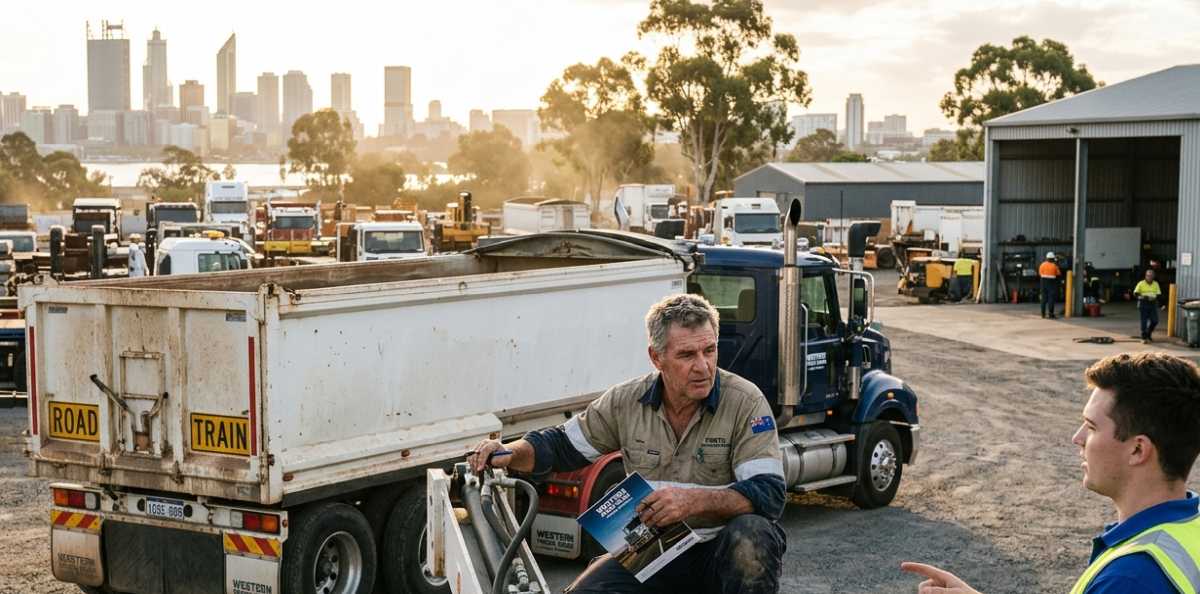
Bulk haulage in Western Australia is not the same game as bulk haulage anywhere else. The distances are longer. The roads are harder. The temperatures are hotter. The dust gets into places you did not know existed. And the loads, especially in mining, civil, and quarry work, are heavier and less forgiving than what most trailers are ever asked to carry. Picking the wrong side tipper for this environment means downtime, repair bills, and cargo you cannot unload cleanly. Picking the right one means a unit that quietly does its job for years while barely reminding you it is there.
The tricky part is that side tippers can all look pretty similar from a distance. Steel body on a chassis, hydraulic hoist, tailgate assembly, wheels underneath, ready to tip. The differences that actually matter tend to be in the details, and those details are where cheap trailers separate from ones built for genuine WA duty. This guide is a practical walkthrough of what to think about, what to check, and what questions to ask before you commit to anything, whether you are running one unit or a fleet.
Use it as a reference before shortlisting. Pair it with a hands on inspection of the actual truck trailers available in your market when you are ready to move from research into decision. No article can tell you exactly which unit to buy for your operation, but the framework below should help you sort options quickly and avoid the traps that catch new buyers out.
Why Side Tippers Suit WA Work Better Than Most Configurations
Before diving into how to choose one, it is worth understanding why side tippers have become such a fixture in Western Australian bulk haulage. In other parts of the country and in other industries, rear tipping trailers still dominate. In WA, particularly for road train operations and mine site work, side tippers have earned their place through practical performance.
The core advantage is speed and safety of unloading. A side tipper drops its load to the side of the trailer, allowing the prime mover and following trailers to remain in a stable position throughout the tipping cycle. On sloped ground, on soft ground, and in windy conditions, side tipping is significantly more stable than rear tipping, where a raised body and elevated centre of gravity can pose real rollover risk if the ground is not level.
Side tippers also allow multiple trailers in a road train configuration to unload sequentially or simultaneously along a windrow, without any trailer having to be uncoupled or repositioned. That efficiency matters enormously for haul cycles where every minute of turnaround affects the daily tonnage moved. Rear tippers in a triple road train have to be split, tipped one at a time, and recombined. Side tippers can move through the same cycle in a fraction of the time.
The trade off is that side tippers concentrate load on one side during unloading, which puts specific demands on the ground and on the tipping mechanism itself. They also cannot dump into narrow chutes or hoppers the way rear tippers can. For applications that require targeted delivery into a receiving structure, rear tipping remains the better tool. For open ground bulk haulage, side tipping is usually the winning configuration.
The Cargo Types That Drive the Choice
Not every bulk cargo is equally suited to side tipping, and understanding what you will actually carry shapes the specification you need.
Free flowing granular materials such as sand, gravel, quarry aggregate, and iron ore all discharge cleanly from a side tipper body when the hoist tilts the body past the angle of repose. These are the classic side tipper cargoes and the applications the units are optimised for.
Sticky, wet, or fibrous materials can be more challenging. Damp clay, wet spoil, and certain ore types with high moisture content may stick to the body walls and require additional cycles or manual intervention to fully discharge. Body linings, wall angles, and vibration or flow assistance features can all help with these harder materials.
Materials with a mix of fine and coarse particles can segregate during transport, with fines settling at the bottom of the body. This can affect discharge patterns and, in some cases, cause tipping issues. Ask about body designs and unloading behaviour if your typical cargo has this profile.
Very dense, heavy materials such as certain ore concentrates put concentrated weight into a smaller volume. That is not a discharge problem, but it does affect how you spec the trailer, since payload capacity may be reached well before the body is visually full. Match the body volume to the density of your typical cargo, not to some general assumption.
How to Pick the Right Side Tipper for WA Conditions Step by Step
Working through the buying decision in a structured way helps prevent the common mistake of falling in love with a spec sheet before you have properly worked out what you actually need. The process below has served plenty of buyers well.
Step one is defining the job. What cargo? What routes? What combination? What frequency? What loading and unloading locations? Write these down. If you cannot answer any of them clearly, spend more time on that step before you look at trailers. Every decision downstream comes back to these fundamentals.
Step two is defining the constraints. What is your existing prime mover and coupling arrangement? What combination mass ratings apply on your routes? What permits do you hold or plan to hold? What is your operational budget for the purchase and for ongoing running costs? These constraints eliminate options fast and let you focus on what will actually work.
Step three is establishing the technical spec. Payload requirement. Body volume matched to material density. Suspension type. Axle configuration. Braking spec. Hoist system. Tailgate arrangement. Body construction. These are the numbers that will drive the shortlist.
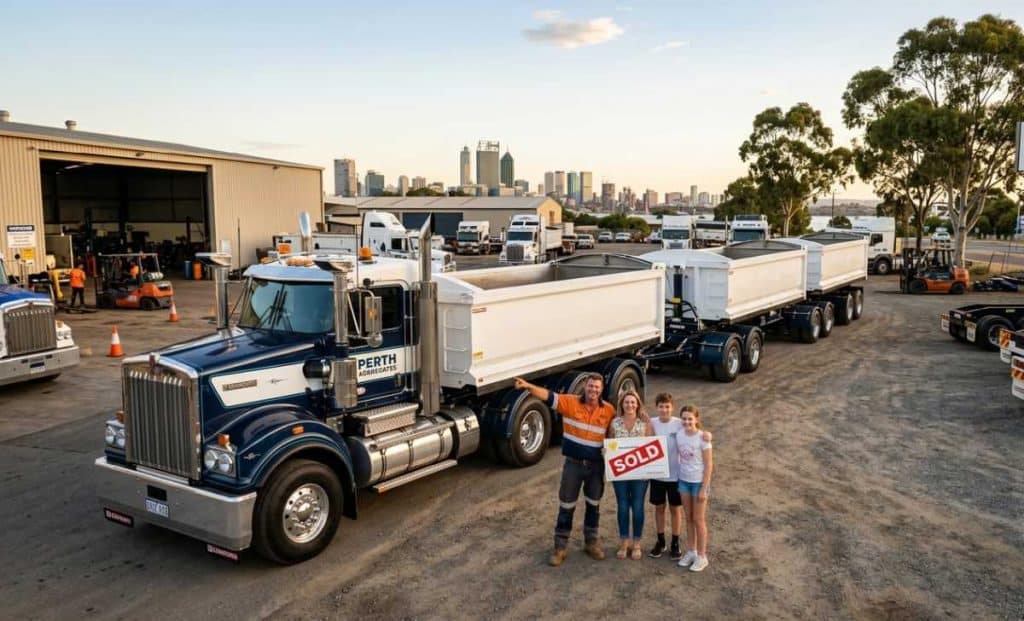
Step four is shortlisting units that match the spec. This is where you compare configurations across the market. For heavy haulage across the state’s toughest routes, the triple side tipper article covering how these units handle Australia’s toughest roads is worth a read since it walks through what a proper WA duty side tipper actually looks like in service.
Step five is physical inspection. Look at the shortlisted units in person. Climb underneath. Open panels. Talk to owners running similar work. Check what the unit actually feels like, not just what it looks like on paper.
Step six is checking parts, service, and warranty support. A side tipper is not a set and forget purchase. You will need parts, servicing, and occasional repairs over its working life. Confirm that the supply chain behind the unit can actually deliver what you will need, when you need it, in the region where you operate.
Step seven is confirming the total cost picture. Purchase price is only part of the equation. Consumables, servicing, tyres, insurance, registration, financing costs, and expected resale all factor in. Do the numbers over your intended ownership period and compare across the shortlist. The cheapest unit up front is not always the cheapest over the ownership life.
Key Specifications That Make or Break Your Side Tipper Choice
Once you understand the framework, the specific technical decisions come into focus. Some of these have obvious right answers for WA conditions. Others involve genuine trade offs that depend on your specific operation.
Chassis, Body, and Hoist System
The chassis is the backbone of the trailer, and its strength and design largely determine the working life of the whole unit. Look at the main rail construction, cross member arrangement, and the way the hoist and body mount to the chassis. Heavier gauge steel, better welding, and thoughtful structural design pay back over years of use in ways that are invisible on delivery day.
The body itself is where cargo lives, and its construction directly affects how the trailer performs. Wall thickness, floor thickness, and the material grade all matter. Higher grade wear resistant steels in high abrasion areas extend body life significantly, particularly for hard rock and ore applications. Body geometry, including wall angles and floor slope, affects how cleanly the material discharges. Body volume needs to match your cargo density so you can hit target payloads without going over mass limits.
The hoist system is what actually tips the body. Modern side tipper hoists are typically hydraulic, with the system sized to lift a fully loaded body reliably in reasonable time. Look at cylinder sizing, hydraulic capacity, mounting arrangement, and safety features such as body prop and controls. A cheap hoist that struggles under load, cycles slowly, or fails prematurely is a serious operational problem.
Tailgate assembly and top rail arrangements affect load retention and discharge cleanliness. Weld quality, hinge design, and sealing all matter for keeping load in the body during transport and letting it out cleanly during discharge.
Suspension, Axles, and Brakes
Suspension type is a key decision. Air suspension provides better ride quality, adjustable ride height, and generally better load protection. It is more expensive to buy and adds some maintenance complexity, but for long distance highway work in WA it is a common choice. Spring suspension is simpler, more robust to certain kinds of abuse, and cheaper to run in some environments. The right choice depends on the route profile and the operator’s preferences.
Axles need to be spec’d for the loads and the environment. Higher rated axles with quality bearings, seals, and brake assemblies stand up to hard duty better than cheaper units. Ask about the axle brand, service intervals, and parts availability before committing.
Braking systems on a heavy trailer are critical, especially in combination work. Air brakes with proper ABS or EBS integration, matched to the prime mover, are the standard for road going heavy trailers. Auto slack adjusters, quality brake chambers, and appropriate friction material selection all contribute to consistent stopping performance and long service life.
Matching Your Trailer Configuration to Your Operating Environment
Not every side tipper is spec’d for every environment, and understanding the trade offs helps you match trailer to job. The table below covers the common configurations you will encounter in WA and where each tends to work best.
| Configuration | Best Suited To | Key Consideration |
| Single Side Tipper | Local and regional bulk haulage, quarry work | Simple, easy to operate, lower payload per combination |
| B-Double Side Tipper | Interstate freight, higher payload work on suitable routes | Requires appropriate permits and prime mover ratings |
| Triple Road Train Side Tipper | Long distance bulk haulage across WA | Highest payload per trip, requires road train access |
| Quad Road Train Side Tipper | Specialised long haul on select routes | Requires appropriate permits and route access |
| Off Road Side Tipper | Mine site and off highway work | Heavier build, may not be road registered |
Each of these has its own spec considerations and access requirements. For road train work in particular, matching the trailer to the combination mass, coupling arrangement, and route access rules is essential and is not something to guess at. Check the ratings on the compliance plate, and if in any doubt, get engineering confirmation.
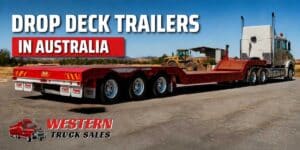
Machinery and equipment movement is a related but separate question. If part of your work involves moving plant and equipment as well as bulk material, you may end up running mixed fleets that include side tippers alongside other trailer types. The next generation bogie tag machinery trailer options are worth understanding for that side of the operation, and for drop deck applications the heavy duty triaxle drop deck trailer covers the equipment transport role that side tippers cannot fulfil.
Compliance, Ratings, and Route Access
According to the National Heavy Vehicle Regulator, heavy vehicles operating in most Australian jurisdictions are subject to the Heavy Vehicle National Law, which sets out requirements for mass, dimension, chain of responsibility, roadworthiness, and fatigue. Side tippers, as part of any combination, must meet the applicable requirements alongside the prime mover.
For WA operators, the state has some specific provisions and access arrangements that affect combination configurations, particularly for road train and higher combination mass work. Access permits, notice arrangements, and route specific rules all shape what combinations you can actually run legally on the routes that matter to your business. This is not something to figure out at the point of purchase. Understand the access picture before you spec the trailer.
Load restraint compliance is another dimension. Side tipper bodies are typically self contained in terms of load retention, but the way you load them, secure any additional restraints, and manage overhead protection all fall within the load restraint requirements. Familiarise yourself with the applicable load restraint guide and make sure your loading practices meet it.
What to Check During Inspection
Whether you are buying new or used, physical inspection of the trailer before you commit is not optional. Here is a run through of the key items to work through carefully during any inspection:
- Chassis condition, looking for cracks, weld failures, or evidence of previous repair around the main rails and cross members
- Body condition, checking wall thickness, wear patterns, floor condition, and any signs of structural damage from loading
- Hoist system operation, cycling the body up and down under observation and listening for unusual noises or hesitation
- Tailgate and top rail condition, checking hinges, seals, and locking arrangements for wear or damage
- Suspension condition, including air bags, shock absorbers, and mounting arrangements, with attention to any signs of leaks or fatigue
- Axle and brake condition, including bearing play, brake chamber condition, air lines, and slack adjuster operation
- Tyre condition and matched tyre sizing across axles, along with rim condition and stud arrangement
- Lighting, wiring, and electrical connections, testing all functions with the prime mover connected
- Coupling gear, king pin, or drawbar assembly as applicable to the trailer type
- Compliance plate details, matching the trailer as inspected against the rated specifications shown
Documenting each inspection point with photos and notes gives you a record to refer back to and, for used trailers, may reveal patterns of issues that the seller has not disclosed. If any single item raises concern, dig into it further before signing anything. For higher value trailers, an independent inspection by a qualified heavy vehicle mechanic is money well spent.
For operators who occasionally need recovery capability alongside their bulk haulage, keeping a related trailer with integrated winch functionality can be useful. The drop deck widener with 9 tonne recovery winch is an example of a purpose built unit that expands what a fleet can practically do. For fleet buyers looking at drop deck options, the range of next generation heavy duty triaxle drop deck trailers covers different applications across the same product family. Wider load work is served by the triaxle drop deck widener trailer, which handles oversize equipment that a plain side tipper cannot.
Ownership Costs and Practical Realities
The purchase is the beginning of the trailer’s cost, not the end. Sensible buyers budget for the full ownership picture and set expectations accordingly.
Tyres are typically the single biggest consumable expense for a heavy trailer in WA. Long distances on rough surfaces eat tyres, and premium quality tyres tend to outlast cheaper alternatives by enough to justify the price difference over the ownership life. Track tyre wear, rotate where appropriate, and budget for regular replacement.
Servicing intervals for the hoist, suspension, brakes, and running gear need to be adhered to. Skipping services to save time or money is false economy. Small issues caught during scheduled servicing are cheap to fix. The same issues left until they cause a failure are expensive and cause downtime.
Body wear is ongoing, particularly for abrasive cargoes. Wear liners can be replaced as they degrade, extending the working life of the main body structure. Track wear patterns and replace liners before they wear through to the underlying structure.
Insurance and registration form part of the annual running cost. Premiums vary depending on the trailer type, usage pattern, and driver profile. Registration costs vary by combination and jurisdiction. Factor both into the total cost of ownership calculation.
Resale is influenced by all of the above. A trailer that has been maintained well, has good records, is a popular configuration, and still presents well will command a premium when it is time to sell. One with patchy records or evident hard use will not. Treat resale as part of the ownership plan from the beginning.
Frequently Asked Questions
What is the biggest mistake buyers make when picking a side tipper?
The most common mistake is buying based on payload capacity or purchase price alone, without properly matching the trailer spec to the actual cargo, routes, and combination arrangements they intend to run. A trailer that looks the same on paper as a more expensive alternative but is built lighter or spec’d lower for the intended duty cycle turns out to cost more over the ownership life through downtime and repair.
How does side tipping compare to rear tipping for WA operations?
Side tipping is generally preferred for open ground bulk haulage, particularly for road train operations and mine site work, because it allows fast sequential unloading without repositioning trailers and offers better stability during discharge. Rear tipping remains the right choice for applications that need targeted delivery into hoppers or chutes.
What suspension type should I go with?
Air suspension is a common choice for long distance highway work in WA because of its ride quality, adjustable ride height, and better load protection. Spring suspension is often preferred for the roughest off highway environments where robustness and simplicity win over ride quality. Match the choice to your route profile and operating priorities.
How long should a properly maintained side tipper last?
A quality heavy duty side tipper used within its design ratings and maintained properly can give many years of productive service, often well over a decade for structural life. Consumables and running gear will cycle through several times during that period. Poor maintenance, overloading, or use in the wrong environment can shorten that life significantly.
Can I use a general purpose side tipper for road train work?
Only if it is rated and equipped for that duty. Road train work requires appropriate mass ratings, coupling arrangements, axle group loads, and running gear spec. A trailer rated for single trailer work at general access mass is not necessarily suitable for higher combination masses under permit. Always check the compliance plate and, where in doubt, obtain engineering confirmation before running the trailer in a combination it was not originally specified for.